How to Install Depth Finder Transducer: 7 Best Options (2026)
Learn how to install depth finder transducer units. We compare 7 options by mount type, fit and features so you can pick the right one for your boat.
 By Owen Palmer
Updated November 23, 2026
 By Owen Palmer
Updated November 2026
If you need to install depth finder transducer hardware on a houseboat, pontoon or small runabout, the right unit depends on how you plan to mount it, how deep your hull is, and whether you want a standalone sounder or a display that pairs with GPS. This guide compares seven widely sold options. Our selection criteria were specifications, brand reputation and the patterns owners commonly report: mounting ease, transducer type (transom, in-hull or bullet), display size, depth range and how well the unit suits freshwater and saltwater use.
Our top picks at a glance
- 1TOP CHOICEBest overallGarmin Striker 4 with TransducerView on Amazon
- 2
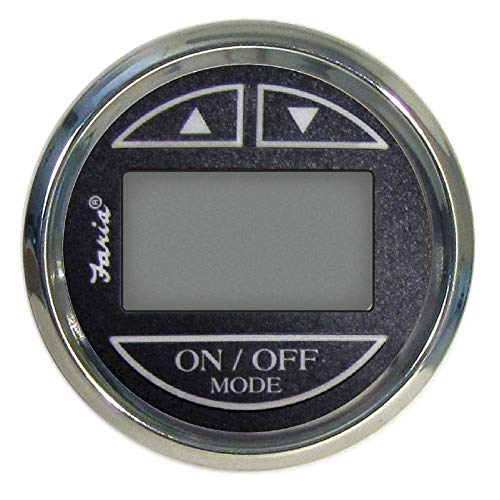 TOP CHOICEBest for through-hull installsFaria 13751 Chesapeake Black Depth Sounder with In-Hull TransducerView on Amazon
- 3
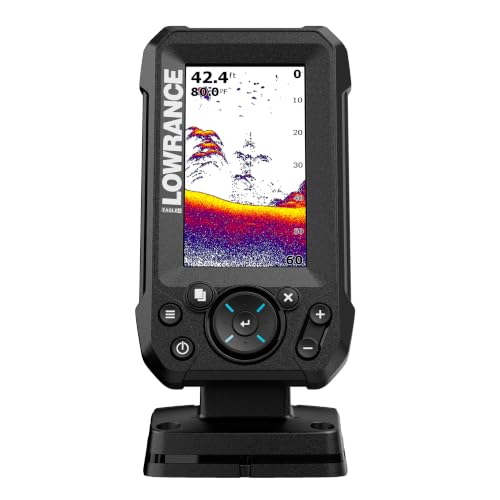 TOP CHOICEBest for wide-area sonar coverageLowrance Eagle 4X Fish Finder with Bullet TransducerView on Amazon
- 4
 Best for color display on a transom mountHawkEye DepthTrax Edge in-Dash Depth Finder, HD Color LCD, 600 ft, TraView on Amazon
- 5
 Best for simple dash installsHawkEye DepthTrax 2B in-Dash LCD Depth Finder with Transom-Mount TransducerView on Amazon
- 6
 Best budget pickSrum Digital Depth Sounder, 2'' in Dash Depth Finder Transducer with White BacklightView on Amazon
- 7
 Best compact gaugeDigital Boat Depth Finder, 52mm/2in Marine Depth Gauge, Depth SounderView on Amazon
Our Top Picks
Quick Comparison
| Product | Best for | Key feature |
|---|---|---|
| Garmin Striker 4 with Transducer | Anglers wanting GPS and sonar in one unit | CHIRP sonar with 3.5-inch GPS display |
| Faria 13751 Chesapeake Black Depth Sounder | Through-hull installs on fiberglass hulls | In-hull transducer, no hull penetration |
| Lowrance Eagle 4X Fish Finder | Wide sonar coverage with a compact display | 4-inch IPS display and autotuning sonar |
| HawkEye DepthTrax Edge | Color display on a transom-mounted setup | HD color LCD rated to 600 ft |
| HawkEye DepthTrax 2B | Straightforward dash-mounted depth reading | In-dash LCD with transom-mount transducer |
| Srum Digital Depth Sounder | Budget-minded boaters needing basic depth | Backlit 2-inch dash gauge, 0–100 m range |
| Digital Boat Depth Finder 52mm | Small dashboards with limited space | 52mm marine gauge with white backlight |
Garmin Striker 4 with Transducer
Garmin 010-01550-00 Striker 4 with Transducer, 3.5" GPS Fishfinder with Chirp
Best for: Anglers and boaters who want sonar and GPS on one screen.
This is a good fit for anglers who fish multiple depths and want to mark spots and navigate in the same unit. Owners often report that the CHIRP sonar gives clearer target separation than older single-frequency sounders.
Key specs
- 3.5-inch display
- GPS receiver built in
- CHIRP sonar capability
- Transducer included
Pros
- Combines sonar and GPS in one unit
- Clear display for its size
- Included transducer simplifies the parts list
Cons
- Smaller screen than larger chartplotters
- Mounting bracket options may be limited for some dash layouts
Bottom line: A strong choice if you want one unit that handles both fish finding and navigation.
View on AmazonFaria 13751 Chesapeake Black Depth Sounder with In-Hull Transducer
Faria 13751 Chesapeake Black Depth Sounder with In-Hull Transducer
Best for: Through-hull and in-hull installs that avoid drilling the transom.
This suits owners of fiberglass hulls who want to avoid cutting a transducer hole. In-hull mounting depends on hull thickness and material, so check compatibility before you commit.
Key specs
- In-hull transducer design
- Black dash-mount display
Pros
- No through-hull fitting required for in-hull mounting
- Classic gauge styling
- Straightforward basic depth reading
Cons
- In-hull signal can weaken on thick or foam-cored hulls
- Fewer features than GPS combo units
Bottom line: Best for owners with fiberglass hulls who want a clean, no-drill install.
View on AmazonLowrance Eagle 4X Fish Finder with Bullet Transducer
Lowrance Eagle 4X Fish Finder with Bullet Transducer | 4-inch IPS Display; wide-angle sonar coverage; autotuning sonar; easy twist-lock connector
Best for: Boaters who want wide sonar coverage in a compact display.
This is a practical pick for small boats where space is tight but you still want a readable screen. The bullet transducer is typically mounted through the hull or on the transom, depending on your setup.
Key specs
- 4-inch IPS display
- Wide-angle sonar coverage
- Autotuning sonar
- Twist-lock transducer connector
Pros
- Bright, wide-viewing-angle display
- Autotuning reduces setup time
- Twist-lock connector simplifies wiring
Cons
- Bullet transducer placement needs care to avoid turbulence
- Smaller screen can be harder to read at a glance on larger boats
Bottom line: A good match for owners who want wide coverage and an easy-to-read screen on a compact helm.
View on AmazonHawkEye DepthTrax Edge in-Dash Depth Finder, HD Color LCD, 600 ft, Transom-Mount Transducer
HawkEye DepthTrax Edge in-Dash Depth Finder, HD Color LCD, 600 ft, Transom-Mount Transducer
Best for: Boaters who want a color display with a transom-mounted transducer.
This fits owners who prefer a color screen and plan to mount the transducer on the transom. The stated 600 ft depth range is well beyond what most inland and nearshore boats need.
Key specs
- HD color LCD
- 600 ft rated depth range
- Transom-mount transducer
- In-dash installation
Pros
- Color display is easier to read in varied light
- Wide depth range
- Transom mount is a familiar installation method
Cons
- Transom mounting requires drilling and careful sealing
- Color displays draw more power than basic gauges
Bottom line: A solid choice for owners who want color and deep-water range on a transom-mounted setup.
View on AmazonHawkEye DepthTrax 2B in-Dash LCD Depth Finder with Transom-Mount Transducer
HawkEye DepthTrax 2B in-Dash LCD Depth Finder with Transom-Mount Transducer
Best for: Simple dash-mounted depth reading without extra features.
If you only need depth and do not want GPS or charting, this is a straightforward option. It suits small runabouts and fishing boats where a clean dash reading is enough.
Key specs
- In-dash LCD
- Transom-mount transducer
Pros
- Simple to read and operate
- Fits standard dash cutouts
- Transom mount is widely understood by installers
Cons
- Fewer features than newer GPS units
- Transom drilling is required
Bottom line: A no-frills choice for owners who want basic depth information on the dash.
View on AmazonSrum Digital Depth Sounder, 2” in Dash Depth Finder Transducer with White Backlight
Srum Digital Depth Sounder, 2'' in Dash Depth Finder Transducer with White Backlight, DC 12V Waterproof Marine Depth Gauge 0-100m/0-328FT for Yachts Boats
Best for: Budget-minded boaters who need a basic depth gauge.
This is a budget pick for owners who want a readable depth gauge and accept fewer features. The 0–100 m range covers most recreational use.
Key specs
- 2-inch in-dash gauge
- White backlight
- 12V DC operation
- 0–100 m / 0–328 ft range
Pros
- Easy to fit in a standard 2-inch cutout
- Backlight aids night reading
- Covers common recreational depths
Cons
- Basic display with no mapping or GPS
- Owners often report that installation instructions can be sparse
Bottom line: A sensible budget option for a simple depth reading on a small boat.
View on AmazonDigital Boat Depth Finder, 52mm/2in Marine Depth Gauge, Depth Sounder Dash Depth Finder Transducer with White Backlight
Digital Boat Depth Finder, 52mm/2in Marine Depth Gauge, Depth Sounder Dash Depth Finder Transducer with White Backlight for Yachts Boats Marine
Best for: Small dashboards where space is limited.
The 52mm form factor suits compact helms and sport boats with limited panel space. It is a basic gauge rather than a full sounder.
Key specs
- 52mm / 2-inch gauge
- White backlight
- Dash-mount transducer
Pros
- Compact footprint
- Backlight for low-light reading
- Simple wiring for basic use
Cons
- Limited features compared with sounder/GPS units
- Installation details depend on your specific transducer mount
Bottom line: Pick this if you have a small panel and only need a depth number.
View on AmazonBuying Guide
Transducer type: transom, in-hull or through-hull
Transom mounts are the most common for outboard boats and require drilling. In-hull units avoid penetrating the hull but can lose signal through thick or foam-cored fiberglass. Through-hull units offer strong signal but require a sealed fitting. Check your hull material before choosing.
Good picks for this: Faria 13751 Chesapeake Black Depth Sounder, HawkEye DepthTrax 2B
Display size and readability
A 2-inch gauge is adequate for depth alone. A 3.5- to 4-inch display helps when you also want sonar images or a GPS map. Consider glare and mounting height as well as size.
Good picks for this: Lowrance Eagle 4X Fish Finder, Garmin Striker 4 with Transducer
Depth range and frequency
Most recreational boats need only tens of feet of range. If you fish offshore or in deep reservoirs, look for a rated range of several hundred feet. Higher frequencies give finer detail in shallow water; lower frequencies reach deeper.
Good picks for this: HawkEye DepthTrax Edge, Srum Digital Depth Sounder
Power draw and wiring
Most units run on 12V DC. Color displays and GPS-equipped units draw more current than simple gauges. Confirm your battery and circuit can handle the load, and use a fused circuit. For wire gauge questions, see What Gauge Wire for Depth Finder? Sizing Guide for Boats.
Good picks for this: Srum Digital Depth Sounder, Digital Boat Depth Finder 52mm
Mounting and fit
Measure the dash cutout before buying. Gauge-style units typically use 2-inch or 52mm openings, while larger displays need more panel space. Transducer placement matters: keep it clear of the prop wash and running strakes. For placement details on pontoons, see Where to Mount Depth Finder on Pontoon: Placement Guide.
Good picks for this: Digital Boat Depth Finder 52mm, Garmin Striker 4 with Transducer
Waterproofing and sealing
Transom and through-hull installs depend on a sealed fitting. Use marine-grade sealant and check the seal after the first few trips. Connectors should be kept dry and secured, and a twist-lock connector helps keep vibration from loosening them.
Good picks for this: Lowrance Eagle 4X Fish Finder, HawkEye DepthTrax Edge
Use case and features you actually need
If you only need depth, a gauge is enough. If you want fish marks, mapping or GPS, choose a combo unit. Decide before you buy, because adding features later often means replacing the head unit.
Good picks for this: Garmin Striker 4 with Transducer, HawkEye DepthTrax 2B
FAQ
Can I install a depth finder transducer myself?
Many owners handle dash-mounted gauges themselves, but transom and through-hull installs involve drilling and sealing. If you are unsure about hull integrity or wiring, consult a marine professional.
Do I need to drill the hull to install a transducer?
Transom mounts require a hole. In-hull mounts avoid drilling but may lose signal through thick or foam-cored hulls. Through-hull installs require a sealed fitting.
Where should the transducer be placed?
Keep it in smooth water away from the prop, strakes and intake openings. Mount it level with the water and follow the manufacturer’s placement guidance for your hull type.
What wire gauge should I use?
It depends on wire length and current draw. Check the manufacturer’s specification and use a fused circuit. See What Gauge Wire for Depth Finder? Sizing Guide for Boats for sizing guidance.
Why does my depth reading seem unstable after installation?
Common causes include air bubbles under the transducer, a loose connection, or placement in turbulent water. Check the mount, reseat connectors and confirm the transducer is fully submerged. For sonar behavior issues, see What Is Chirp on a Depth Finder? Causes and Fixes.
Do I need GPS with my depth finder?
No. GPS is useful for navigation and mapping, but a standalone depth gauge gives you depth without it. Choose based on how you plan to use the boat.
Conclusion
To install depth finder transducer hardware successfully, start with your hull type and mounting method, then choose a unit that matches your display and feature needs. The Garmin Striker 4 suits anglers who want sonar and GPS together. The Faria 13751 fits fiberglass hulls where avoiding drilling matters. The Lowrance Eagle 4X is a good balance of display and coverage for compact helms, while the HawkEye DepthTrax Edge suits color-display transom installs. For simple dash readings, the HawkEye DepthTrax 2B, Srum Digital Depth Sounder and Digital Boat Depth Finder 52mm cover basic needs. Always check fit and hull compatibility before buying, and consult a marine professional for structural or electrical questions.
Sources
- Boating safety guidance and equipment recommendations for recreational vessels (uscg.mil)
- Charting, depth data and navigation information for US waters (noaa.gov)
- Standards for marine electronics data communication
Related reading
- What Is a Transducer on a Depth Finder? How It Works and Why It Matters
- Transducer for Depth Finder: 6 Best Picks Compared (2026)
About Owen Palmer
Owen Palmer is part of our editorial team and reviews and edits our houseboating guides, checking product details against manufacturer specifications and owner feedback.
About the author
Owen Palmer writes reviews and buying guides for Discover Houseboating.