Top 6 Flush Mount Depth Finder Options for Boats
Comparing six flush mount depth finder options by fit, display size, transducer type and owner feedback, so you can match one to your boat and needs.
 By Owen Palmer
Updated November 23, 2026
 By Owen Palmer
Updated November 2026
Shopping for a flush mount depth finder means balancing three things: how the display fits your dash or console, whether the transducer suits your hull and water type, and how easy the unit is to read in bright sun. This guide compares six models against those criteria: mounting style and cutout fit, transducer type and depth range, display size and readability, and recurring owner feedback about setup and reliability. It is built from manufacturer specifications and the patterns owners commonly report.
Our top picks at a glance
- 1TOP CHOICEBest overallHawkEye DepthTrax 2B in-Dash LCD Depth FinderView on Amazon
- 2
 TOP CHOICEBest for color display on a larger dashHawkEye DepthTrax Edge in-Dash Depth Finder, HD Color LCD, 600 ftView on Amazon
- 3
 TOP CHOICEBest budget pickDigital Boat Depth Finder, 52mm/2in Marine Depth GaugeView on Amazon
- 4
 Best for combined fishfinder useGarmin Striker 4 with Transducer, 3.5" GPS Fishfinder with CHIRPView on Amazon
- 5
 Best for dual-beam coverageHumminbird PiranhaMAX 4 Fish Finder with Transducer, Dual Beam SonarView on Amazon
- 6
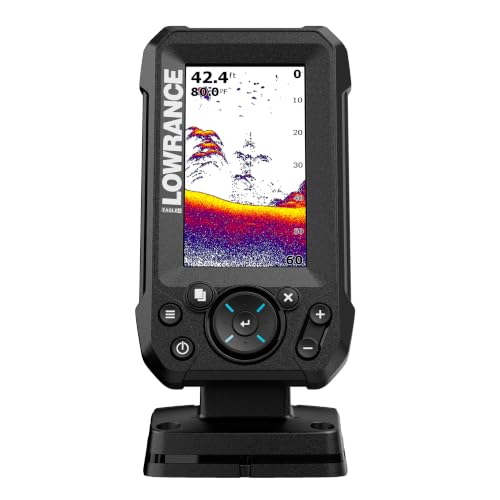 Best for wide-angle sonar on a 4-inch screenLowrance Eagle 4X Fish Finder with Bullet TransducerView on Amazon
Our Top Picks
Quick Comparison
| Product | Best for | Key feature |
|---|---|---|
| HawkEye DepthTrax 2B in-Dash LCD Depth Finder | Overall fit on a standard dash | In-dash LCD with transom-mount transducer |
| HawkEye DepthTrax Edge in-Dash Depth Finder | Color readability on a larger dash | HD color LCD rated to 600 ft |
| Digital Boat Depth Finder, 52mm/2in Gauge | Small budget installs | 2-inch gauge format with white backlight |
| Garmin Striker 4 with Transducer | Depth plus fish-finding | 3.5-inch GPS fishfinder with CHIRP sonar |
| Humminbird PiranhaMAX 4 Fish Finder | Dual-beam sonar coverage | Dual-beam sonar with transducer included |
| Lowrance Eagle 4X Fish Finder | Wide sonar view on a small screen | 4-inch IPS display with bullet transducer |
HawkEye DepthTrax 2B in-Dash LCD Depth Finder
HawkEye DepthTrax 2B in-Dash LCD Depth Finder with Transom-Mount Transducer
Best for: Overall fit on a standard dash
This suits owners who want a dedicated depth readout that drops into an existing dash opening without rebuilding the console. It fits boaters who mainly need a reliable depth number rather than a full mapping display.
Key specs
- In-dash LCD display format
- Transom-mount transducer included
Pros
- Simple dedicated depth readout with a straightforward layout
- Flush-mount format keeps the dash clean
- Transom-mount transducer is a common, easy install location
Cons
- Monochrome-style display offers less detail than color screens
- Limited to depth data rather than full chart features
Bottom line: A good pick for anglers and pontoon owners who want a clean, dedicated depth readout and a tidy dash.
View on AmazonHawkEye DepthTrax Edge in-Dash Depth Finder, HD Color LCD, 600 ft
HawkEye DepthTrax Edge in-Dash Depth Finder, HD Color LCD, 600 ft, Transom-Mount Transducer
Best for: Color readability on a larger dash
This is aimed at boaters who spend long hours on the water and want easier readability in changing light. The color screen and stated 600-foot range make it a better match for offshore-leaning or deeper-water use than basic monochrome units.
Key specs
- HD color LCD display
- Rated depth range of 600 ft
- Transom-mount transducer
Pros
- Color display improves contrast in mixed lighting
- Deep rated range suits larger lakes and open water
- In-dash format keeps the installation flush
Cons
- Larger display requires a correspondingly sized dash cutout
- Owners report that setup takes more time than basic gauges
Bottom line: Best for boaters who want a clearer color readout and expect to work in deeper water.
View on AmazonDigital Boat Depth Finder, 52mm/2in Marine Depth Gauge
Digital Boat Depth Finder, 52mm/2in Marine Depth Gauge, Depth Sounder Dash Depth Finder Transducer with White Backlight for Yachts Boats Marine
Best for: Small budget installs
A 52 mm gauge-style unit is a practical option for small boats, panel retrofits, or owners who only want a basic depth number. Its small footprint makes it easier to fit where a full-size display will not go.
Key specs
- 52 mm / 2-inch gauge format
- Dash-mount depth sounder with transducer
- White backlight for night visibility
Pros
- Compact size fits tight panels
- Backlight helps readability after dark
- Straightforward, single-purpose readout
Cons
- No mapping or fish-finding features
- Small display is harder to read at a glance than larger screens
Bottom line: A sensible choice for owners who want basic depth information on a tight budget and a small panel.
View on AmazonGarmin Striker 4 with Transducer, 3.5″ GPS Fishfinder with CHIRP
Garmin 010-01550-00 Striker 4 with Transducer, 3.5" GPS Fishfinder with Chirp
Best for: Depth plus fish-finding
This suits anglers who want depth data alongside fish marking and GPS position on one screen. It is more of a fishfinder than a pure depth gauge, so it fits boats that use the unit for both navigation and fishing.
Key specs
- 3.5-inch display
- GPS fishfinder with CHIRP sonar
- Transducer included
Pros
- Combines depth, fish marking and GPS in one unit
- CHIRP sonar is widely regarded for detail in the water column
- Well-established Garmin support ecosystem
Cons
- Smaller screen than larger combo units
- Mounting requires planning to keep the look flush
Bottom line: Good for anglers who want one unit to handle depth, fish arches and position.
View on AmazonHumminbird PiranhaMAX 4 Fish Finder with Transducer, Dual Beam Sonar
Humminbird PiranhaMAX 4 Fish Finder with Transducer, Dual Beam Sonar
Best for: Dual-beam sonar coverage
Owners who want to see both a wide area and fine detail under the boat tend to choose dual-beam units. This model fits small-boat anglers who want fish-finding and depth in a compact package.
Key specs
- Dual-beam sonar
- Transducer included
Pros
- Dual-beam sonar offers both wide coverage and detail
- Compact footprint for small boats
- Transducer included in the package
Cons
- Display is smaller than many current flagship units
- Limited mapping compared with GPS-focused models
Bottom line: A practical choice for small-boat anglers who want dual-beam sonar without a large investment in features they will not use.
View on AmazonLowrance Eagle 4X Fish Finder with Bullet Transducer
Lowrance Eagle 4X Fish Finder with Bullet Transducer | 4-inch IPS Display; wide-angle sonar coverage; autotuning sonar; easy twist-lock connector
Best for: Wide sonar view on a 4-inch screen
This suits boaters who want a wide sonar picture on a compact display and a simple twist-lock connection for transducer swaps. It works well where dash space is limited but the boat still runs in mixed depths.
Key specs
- 4-inch IPS display
- Bullet transducer with twist-lock connector
- Wide-angle sonar coverage and autotuning
Pros
- IPS screen offers good viewing angles
- Autotuning reduces setup effort for many users
- Twist-lock connector simplifies transducer changes
Cons
- Small screen limits chart detail
- Bullet transducer placement needs care to avoid turbulence
Bottom line: A good fit for owners who want a clear, wide sonar view in a small footprint and easy setup.
View on AmazonBuying Guide
Mounting style and dash cutout
Measure the opening before you shop. Flush-mount units need a cutout that matches the display bezel, and many gauge-style units need a 52 mm (2-inch) hole. Measure twice, then check the manufacturer’s cutout template. For more on placement, see Where to Mount Depth Finder on Pontoon: Placement Guide.
Good picks for this: Digital Boat Depth Finder 52mm, HawkEye DepthTrax 2B
Transducer type and hull fit
The transducer determines how well the unit reads depth. Transom-mount units are common on powerboats, through-hull units need a suitable hull and installation, and bullet transducers need clean water flow. Read the transducer section of Through Hull Depth Finder: How It Works, Install Steps and Tips (2026) before choosing. For background, see What Is a Transducer on a Depth Finder? How It Works and Why It Matters.
Good picks for this: HawkEye DepthTrax 2B, Lowrance Eagle 4X
Display size and readability
Larger screens are easier to read at a glance, but they need more room. Color displays help in mixed lighting, while backlit gauges help at night. If the unit will sit in direct sun, look for a display with good viewing angles and a visible backlight setting.
Good picks for this: HawkEye DepthTrax Edge, Lowrance Eagle 4X
Depth range and water type
Check the rated depth range against where you actually boat. Shallow rivers and bays rarely need 600 feet of range, while open lake and offshore use does. Also consider water clarity and bottom type, since these affect how cleanly the sonar returns read. See How Does a Depth Finder Work on a Boat? Sonar Basics Explained for how these factors interact.
Good picks for this: HawkEye DepthTrax Edge, Humminbird PiranhaMAX 4
Fish-finding versus depth-only features
Depth-only gauges are simpler and cheaper to keep in service. Combo units add fish arches, GPS position and sometimes charts, which helps anglers but adds setup and power demands. If you plan to use it with mapping, Depth Finder GPS Combo: How to Choose and Use One on a Houseboat (2026) covers the trade-offs.
Good picks for this: Garmin Striker 4, Humminbird PiranhaMAX 4
Power, wiring and battery needs
Most dash units run on the boat’s 12-volt system, so wire gauge and fusing matter for reliable operation. Use the manufacturer’s wiring diagram and keep runs short. Battery condition also affects sonar performance during engine start. For a practical overview, see Battery for Depth Finder: How to Choose and Maintain the Right One.
Good picks for this: Garmin Striker 4, Digital Boat Depth Finder 52mm
Durability and care
Marine units face UV, spray and vibration. Look for sealed housings and rated ingress protection, and clean the transducer face according to the manual. Owners often report that correct transducer mounting, not the display, is the main cause of trouble. Check the transducer for air bubbles and any fouling at the start of each season.
Good picks for this: HawkEye DepthTrax 2B, Lowrance Eagle 4X
FAQ
Can I install a flush mount depth finder myself?
Many owners do, provided the cutout is correct, the wiring is fused, and the transducer is mounted per the manual. If the boat has complex electrical systems or the transducer requires a through-hull fitting, a marine technician can handle the job. Consult a professional for any through-hull installation.
What size cutout does a flush mount depth finder need?
It depends on the model. Gauge-style units often use a 52 mm (2-inch) opening, while larger in-dash displays need a bigger cutout. Always use the manufacturer’s template and measure before drilling.
Does a depth finder work out of water?
No. Sonar needs the transducer in water to send and receive signals. Running the unit dry will not damage most models, but it will show no useful readings. For more, see Will Depth Finder Work Out of Water? What Happens and What to Do.
What is the difference between CHIRP and standard sonar?
CHIRP sends a sweep of frequencies rather than one fixed frequency. This is widely described as producing clearer detail, especially for fish targets. For a plain-language explanation, see What Is Chirp on a Depth Finder? Causes and Fixes.
Do I need a depth finder that includes GPS?
Not for basic depth readings. GPS matters if you want to mark spots, follow tracks or use mapping. Pure depth gauges are fine for many pontoon and small-boat uses.
How do I know which transducer my boat needs?
Check whether your hull allows transom mounting, whether a through-hull fitting is practical, and what water type you run. Match the transducer rating and mounting style to the display you choose.
How much power does a depth finder draw?
Draw varies by model and screen brightness. Check the manufacturer’s specification and use an appropriately sized, fused circuit so the unit does not drain the starting battery.
Conclusion
For a clean in-dash depth readout on a standard dash, the HawkEye DepthTrax 2B suits most owners. If you want color and deeper range, the HawkEye DepthTrax Edge is the better match. Budget and small-panel installs point toward the Digital Boat Depth Finder 52mm gauge. Anglers who want depth and fish-finding together should look at the Garmin Striker 4 or the Humminbird PiranhaMAX 4, while the Lowrance Eagle 4X suits owners who want a wide sonar view on a compact screen. Measure your opening, confirm your transducer fit, and choose the feature set you will actually use.
Sources
- Charts, water depth data and navigation safety information for U.S. waters (noaa.gov)
- Boating safety guidance, equipment requirements and navigation rules (uscg.mil)
- Marine industry standards and recreational boating product information
About Owen Palmer
Owen Palmer is part of our editorial team and reviews and edits our houseboating guides, checking product details against manufacturer specifications and owner feedback.
About the author
Owen Palmer writes reviews and buying guides for Discover Houseboating.