Top 7 Wireless Depth Finder Transducers for Boats and Kayaks
Compare 7 wireless depth finder transducer options for kayaks and boats. See specs, pros, cons and who each model suits before you buy.
 By Owen Palmer
Updated November 23, 2026
 By Owen Palmer
Updated November 2026
A wireless depth finder transducer lets you read water depth and fish location without running a cable from the sensor head through the hull or along the gunwale. That matters on kayaks, small skiffs, canoes and ice-fishing setups, where routing wire is awkward or impossible. This guide compares seven products on the criteria that matter most for this purchase: how the transducer links to the display, the depth range and beam coverage it offers, how it is powered, how easily it mounts to your vessel, and how well it holds up to water, cold and rough handling. Each entry lists what the product is suited to, what its listing describes, and where owners commonly find it falls short.
Our top picks at a glance
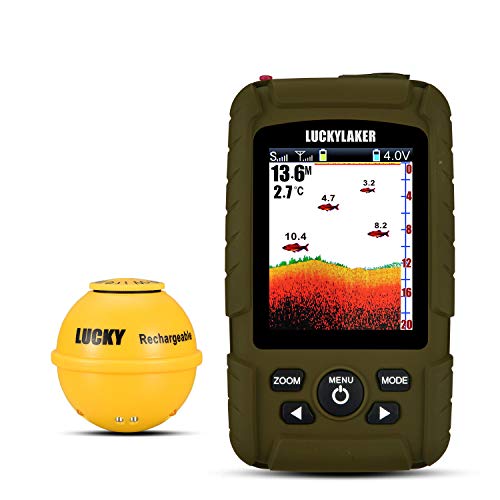
- 1TOP CHOICEBest overallLUCKYLAKER Sonar Kayak Fish Finder Portable Water Handheld Depth FindeView on Amazon
- 2
 TOP CHOICEBest for kayak anglersLUCKY Portable Sonar Fish Finder Boat Depth Fishing Fish Finders WaterView on Amazon
- 3
 TOP CHOICEBest for transom-mounted boatsHawkEye DepthTrax 2B in-Dash LCD Depth Finder with Transom-Mount TransducerView on Amazon
- 4
 Best for ice fishingLUCKY Wireless Handheld Fish Finders Boat Wired Transducer Fishing FinView on Amazon
- 5
 Best budget pickLUCKY Portable Fish Finder Handheld Kayak Fish Finders Wired Fish DeptView on Amazon
- 6
 Best for a full-color displayLowrance Eagle 4X Fish Finder with Bullet TransducerView on Amazon
- 7
 Best for wired-compatible setupsPortable Wired Fish Finder Ice Kayak Fishing Gear Depth Finder with LCView on Amazon
Our Top Picks
Quick Comparison
| Product | Best for | Key feature |
|---|---|---|
| LUCKYLAKER Sonar Kayak Fish Finder | Kayaks and small boats needing a simple wireless setup | Wireless handheld-style sonar with LCD screen |
| HawkEye DepthTrax 2B | Transom-mounted boats with an in-dash display | Transom-mount transducer with LCD depth readout |
| LUCKY Portable Sonar Fish Finder Boat Depth Fishing | Kayak anglers who move between spots | Waterproof handheld unit with transducer |
| Portable Wired Fish Finder Ice Kayak Fishing Gear Depth Finder | Anglers who prefer a wired sensor cable | Wired transducer with LCD display |
| LUCKY Portable Fish Finder Handheld Kayak Fish Finders | Buyers who want a basic, low-complexity unit | Handheld wired sonar sensor for boat fishing |
| Lowrance Eagle 4X Fish Finder with Bullet Transducer | Anglers who want a larger, clearer screen | 4-inch IPS display with wide-angle sonar coverage |
| LUCKY Wireless Handheld Fish Finders Boat Wired Transducer | Ice fishing and sea fishing from shore or small craft | Waterproof wireless handheld with sensor transducer |
LUCKYLAKER Sonar Kayak Fish Finder Portable Water Handheld Depth Finder Boat Transducer Wireless Fish Finders Sea LCD Screen Fishing
LUCKYLAKER Sonar Kayak Fish Finder Portable Water Handheld Depth Finder Boat Transducer Wireless Fish Finders Sea LCD Screen Fishing
Best for: Kayaks and small boats needing a simple wireless setup
This is a fit for paddlers and small-boat anglers who want to read depth without running cable from the sensor through the hull. It suits people who value a compact, self-contained unit they can move between vessels or to the shore.
Key specs
- Wireless transducer connection to an LCD display
- Portable handheld-style form factor
- Designed for kayak, boat and sea fishing use
Pros
- No through-hull or long cable run required
- Easy to move between kayaks and small boats
- Simple display for quick depth reads
Cons
- Wireless links can drop out at longer distances or with obstructions in the path
- Battery life is limited, so carry spares for longer trips
Bottom line: A sensible pick for kayak anglers who want wireless convenience and do not need advanced mapping.
View on AmazonHawkEye DepthTrax 2B in-Dash LCD Depth Finder with Transom-Mount Transducer
HawkEye DepthTrax 2B in-Dash LCD Depth Finder with Transom-Mount Transducer
Best for: Transom-mounted boats with an in-dash display
This suits boaters who want a permanent, dash-mounted readout with a transom transducer. It is a better match for fixed installations than for kayaks or frequently moved units.
Key specs
- In-dash LCD depth display
- Transom-mount transducer
- Designed for permanent mounting on powerboats
Pros
- Clear, fixed display visible from the helm
- Transom mount keeps the transducer out of the cabin area
- Suitable for a set-and-forget installation
Cons
- Installation requires drilling and running wire, so it is not a plug-in wireless setup
- Less practical for kayaks or boats that are often trailered and moved
Bottom line: Best for owners of powerboats who want a permanent depth readout and are comfortable with a wired installation.
View on AmazonLUCKY Portable Sonar Fish Finder Boat Depth Fishing Fish Finders Waterproof Handheld Wireless Fishing Finder Kayak Transducer Depth Finders for Ice Fishing Sea
LUCKY Portable Sonar Fish Finder Boat Depth Fishing Fish Finders Waterproof Handheld Wireless Fishing Finder Kayak Transducer Depth Finders for Ice Fishing Sea
Best for: Kayak anglers who move between spots
This fits anglers who launch from shore or a kayak and need a waterproof, grab-and-go unit. It works well for shallow to moderate depths where portability matters more than screen size.
Key specs
- Waterproof handheld body
- Wireless transducer link
- Marketed for kayak, boat and ice fishing use
Pros
- Lightweight and easy to carry to the water
- Waterproof body suits wet conditions
- Works across several fishing scenarios
Cons
- Small screen makes fine detail harder to read in bright sun
- Wireless range may be limited around metal hulls
Bottom line: A practical choice for kayak anglers who want a portable, waterproof wireless unit without a large display.
View on AmazonPortable Wired Fish Finder Ice Kayak Fishing Gear Depth Finder with LCD Display Sonar Transducer
Portable Wired Fish Finder Ice Kayak Fishing Gear Depth Finder with LCD Display Sonar Transducer
Best for: Anglers who prefer a wired sensor cable
This suits people who want a reliable cable link rather than a wireless signal, especially on ice or in setups where the transducer sits at the end of a fixed cable.
Key specs
- Wired transducer with LCD display
- Portable kayak and ice-fishing use
- Sonar transducer on a fixed cable run
Pros
- Wired link avoids wireless dropouts
- Simple, portable layout for kayaks and ice fishing
- Clear LCD for depth reads
Cons
- Cable length limits placement flexibility
- Cable can snag on gear in tight kayak setups
Bottom line: A good fit for anglers who want a wired connection for consistency and do not mind managing a cable.
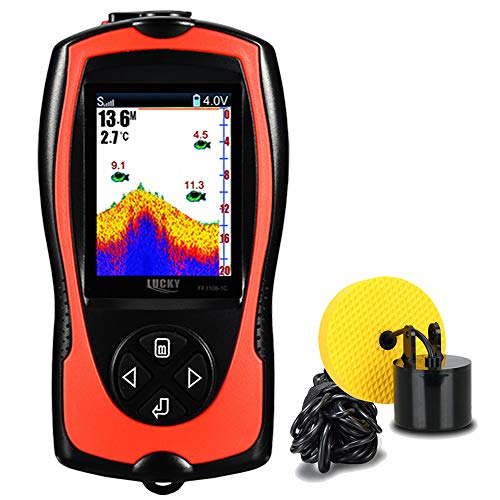
View on AmazonLUCKY Portable Fish Finder Handheld Kayak Fish Finders Wired Fish Depth Finder Sonar Sensor Transducer for Boat Fishing Sea Fishing
LUCKY Portable Fish Finder Handheld Kayak Fish Finders Wired Fish Depth Finder Sonar Sensor Transducer for Boat Fishing Sea Fishing
Best for: Buyers who want a basic, low-complexity unit
This is aimed at buyers who want a straightforward handheld sonar with few settings to learn. It works for occasional fishing trips rather than detailed bottom mapping.
Key specs
- Handheld wired sonar sensor
- Designed for boat and sea fishing
- Portable kayak-friendly format
Pros
- Simple to set up and use
- Portable and light
- Suited to basic depth checks
Cons
- Limited features compared with larger chartplotter-style units
- Wired cable restricts placement
Bottom line: A reasonable budget-leaning option for casual anglers who need depth readings and little else.
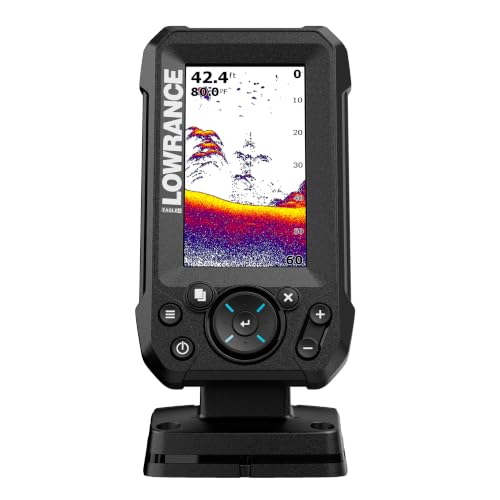
View on AmazonLowrance Eagle 4X Fish Finder with Bullet Transducer
Lowrance Eagle 4X Fish Finder with Bullet Transducer | 4-inch IPS Display; wide-angle sonar coverage; autotuning sonar; easy twist-lock connector
Best for: Anglers who want a larger, clearer screen
This is a better match for boaters who want a bigger display and more capable sonar presentation. It fits those willing to spend more time on setup in exchange for clearer readings.
Key specs
- 4-inch IPS display
- Wide-angle sonar coverage
- Autotuning sonar and easy twist-lock transducer connector
Pros
- Larger IPS screen is easier to read in daylight
- Autotuning reduces manual adjustment
- Twist-lock connector simplifies transducer swaps
Cons
- Bullet transducer requires a proper mounting location
- More involved to install than handheld units
Bottom line: The strongest option here for boaters who want a clearer display and are prepared for a fixed installation.
View on AmazonLUCKY Wireless Handheld Fish Finders Boat Wired Transducer Fishing Finder Sensor Sonar Waterproof Portable Depth Finders for Ice Fishing Sea Fishing Kayak
LUCKY Wireless Handheld Fish Finders Boat Wired Transducer Fishing Finder Sensor Sonar Waterproof Portable Depth Finders for Ice Fishing Sea Fishing Kayak
Best for: Ice fishing and sea fishing from shore or small craft
This suits anglers who fish from shore, ice or small craft and want a waterproof wireless handheld. It is useful for checking depth quickly before dropping a line.
Key specs
- Wireless handheld design
- Waterproof body
- Marketed for ice, sea and kayak fishing
Pros
- Wireless link avoids cable clutter
- Waterproof body suits wet and cold conditions
- Portable for shore and ice use
Cons
- Wireless range can be affected by water and ice conditions
- Battery consumption can be significant in cold weather
Bottom line: A solid pick for ice and shore anglers who want wireless portability and a waterproof build.
View on AmazonBuying Guide
Wireless link range and reliability
Check the stated wireless range in the listing and assume real-world range will be shorter once water, metal hulls and ice are involved. Test the link at the dock before a trip, with the transducer submerged at the depth you plan to fish.
Good picks for this: LUCKYLAKER Sonar Kayak Fish Finder, LUCKY Wireless Handheld Fish Finders Boat Wired Transducer
Display size and readability
A larger screen is easier to read in direct sun and on rough water. Smaller handheld screens work well for quick depth reads but can make fine bottom detail hard to interpret.
Good picks for this: Lowrance Eagle 4X Fish Finder with Bullet Transducer, HawkEye DepthTrax 2B
Wired versus wireless connection
Wired transducers avoid signal dropouts but limit where you can place the sensor. Wireless units give you flexibility but depend on battery life and clear line of sight. Decide which trade-off matters more for your vessel.
Good picks for this: Portable Wired Fish Finder Ice Kayak Fishing Gear Depth Finder, LUCKY Portable Sonar Fish Finder Boat Depth Fishing
Mounting and fit for your vessel
Kayaks and small boats usually need a portable or clamp-style setup, while powerboats often benefit from a transom or through-hull mount. Measure your transom or gunwale and confirm the transducer will sit fully submerged at normal running trim.
Good picks for this: HawkEye DepthTrax 2B, LUCKY Portable Fish Finder Handheld Kayak Fish Finders
Depth range and sonar coverage
Check the depth range the listing states and match it to the water you fish most. Wide-angle sonar covers more area but can make individual targets harder to separate.
Good picks for this: Lowrance Eagle 4X Fish Finder with Bullet Transducer, LUCKYLAKER Sonar Kayak Fish Finder
Power source and battery care
Wireless handhelds rely on batteries, and cold weather reduces battery output. Carry spares, keep batteries warm before ice trips and remove them from the unit during long storage periods.
Good picks for this: LUCKY Wireless Handheld Fish Finders Boat Wired Transducer, LUCKY Portable Sonar Fish Finder Boat Depth Fishing
Durability and water resistance
Look for a waterproof body and a sealed transducer. Rinse freshwater off after use, dry the display housing and store the unit out of direct sun to protect the screen and seals.
Good picks for this: LUCKY Portable Sonar Fish Finder Boat Depth Fishing, Portable Wired Fish Finder Ice Kayak Fishing Gear Depth Finder
FAQ
What is a wireless depth finder transducer?
It is the underwater sensor that sends sonar pulses and receives echoes, connected to a display by a radio link rather than a cable. This lets you place the sensor without running wire through the hull.
How far can a wireless transducer reach?
Listed ranges are a best-case figure. Water, metal hulls and ice can reduce usable distance, so test the link before relying on it.
Can I use a wireless transducer on a kayak?
Yes. Portable wireless units are commonly marketed for kayaks because they avoid running cable along the hull and are easy to carry between launch sites.
Do wireless depth finders work for ice fishing?
Many handheld models are marketed for ice fishing. Keep batteries warm, since cold reduces battery output and can shorten run time.
Is a wired transducer more reliable than a wireless one?
A wired connection avoids radio dropouts, so it is generally more consistent. The trade-off is less flexibility in where you can place the sensor.
How do I know if a transducer will fit my boat?
Check the mounting style the product uses, measure your transom or gunwale, and confirm the transducer will stay submerged at normal running speed. If unsure, consult the manufacturer or a marine professional before drilling.
Conclusion
For kayaks and small boats, a portable wireless unit such as the LUCKYLAKER Sonar Kayak Fish Finder or the LUCKY Portable Sonar Fish Finder is a practical starting point. Ice and shore anglers will find the LUCKY Wireless Handheld Fish Finders suited to their conditions. Powerboat owners who want a clearer, fixed readout should look at the HawkEye DepthTrax 2B or the Lowrance Eagle 4X. Match the choice to your vessel, your connection preference and how often you move the unit.
Sources
- Recreational boating safety guidance and equipment requirements for US waters (uscg.mil)
- Water depth, bathymetry and navigation chart information (noaa.gov)
- Fishing regulations and responsible use guidance for US waterways (fws.gov)
Related reading
- What Is a Transducer on a Depth Finder? How It Works and Why It Matters
- Transducer for Depth Finder: 6 Best Picks Compared (2026)
- How Does a Depth Finder Transducer Work? Signals, Setup and Fixes
- Will Depth Finder Work Out of Water? What Happens and What to Do
- Where to Mount Depth Finder on Pontoon: Placement Guide
About Owen Palmer
Owen Palmer is part of our editorial team and reviews and edits our houseboating guides, checking product details against manufacturer specifications and owner feedback.
About the author
Owen Palmer writes reviews and buying guides for Discover Houseboating.