Installing Depth Finder on Boat: 6 Best Picks for Every Setup (2026)
Installing depth finder on boat? Compare six top models by mounting type, display, and boat size, with clear pros, cons, and buying tips to choose right.
 By Owen Palmer
Updated November 23, 2026
 By Owen Palmer
Updated November 2026
Installing a depth finder on a boat is one of the most useful upgrades you can make, whether you fish, cruise shallow channels, or anchor a houseboat in unfamiliar water. The right unit depends on how you plan to mount it, how big a screen you need, and whether your boat has a transom, a dash, or a hull that suits a through-hull or trolling motor mount. This guide compares six real, widely sold models across those criteria so you can narrow the field before you buy. Our selection leans on manufacturer specifications, brand reputation, and patterns that owners commonly report, not on any claim of hands-on testing.
Our top picks at a glance
- 1TOP CHOICEBest overallGarmin Striker 4 with Transducer, 3.5" GPS Fishfinder with ChirpView on Amazon
- 2
 TOP CHOICEBest for dash mountingHawkEye DepthTrax 2B in-Dash LCD Depth Finder with Transom-Mount TransducerView on Amazon
- 3
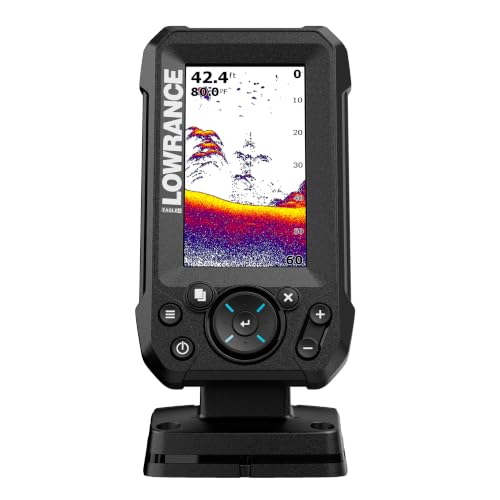 TOP CHOICEBest for wide sonar coverageLowrance Eagle 4X Fish Finder with Bullet TransducerView on Amazon
- 4
 Best for kayaks and small craftLUCKY Kayak Portable Fish Depth Finder FFC1108View on Amazon
- 5
 Best handheld optionHawkEye DepthTrax DT1H Handheld Depth Finder with LCDView on Amazon
- 6
 Best budget pick for a dash gaugeDigital Boat Depth Finder, 52mm/2in Marine Depth Gauge with White BacklightView on Amazon
Our Top Picks
Quick Comparison
| Product | Best for | Key feature |
|---|---|---|
| Garmin Striker 4 | Anglers wanting GPS and sonar in one unit | Chirp sonar with a 3.5-inch GPS display |
| HawkEye DepthTrax 2B | Boats with a dash cutout | In-dash LCD with transom-mount transducer |
| Lowrance Eagle 4X | Users who want a wide sonar view | 4-inch IPS display with autotuning sonar |
| LUCKY Kayak Portable Fish Finder | Kayaks and small open boats | Castable transducer with portable LCD |
| HawkEye DepthTrax DT1H | Handheld readings and quick checks | Handheld LCD rated to 300 ft |
| Digital Boat Depth Finder 52mm | Budget dash-mounted depth gauge | 52mm gauge with white backlight |
Garmin Striker 4 with Transducer, 3.5″ GPS Fishfinder with Chirp
Garmin 010-01550-00 Striker 4 with Transducer, 3.5" GPS Fishfinder with Chirp
Best for: Anglers who want sonar and GPS on one screen
This unit suits anglers who fish from a small to mid-size boat and want to mark spots, track their route, and read bottom structure in one compact display. It is a common choice for first-time installers because the mounting hardware is straightforward on most transoms and gunwales.
Key specs:
- 3.5-inch color display
- Chirp sonar technology
- Built-in GPS for waypoints and tracks
- Includes transducer
Pros:
- Combines sonar and GPS in a single unit
- Chirp sonar gives sharper target separation than standard single-frequency units
- Owners often report simple setup with the included transducer
Cons:
- The 3.5-inch screen can feel small for detailed chart work
- Advanced mapping features require a more expensive model
Bottom line: A strong all-around choice for anglers who want sonar and GPS without moving to a larger display.
View on AmazonHawkEye DepthTrax 2B in-Dash LCD Depth Finder with Transom-Mount Transducer
HawkEye DepthTrax 2B in-Dash LCD Depth Finder with Transom-Mount Transducer
Best for: Boats with a dash cutout for a permanent gauge
This model fits boat owners who want a fixed, dash-mounted readout rather than a portable screen. Installation requires a cutout in the dash or console and a transom-mount transducer, so it works best for owners comfortable with basic wiring and drilling.
Key specs:
- In-dash LCD display
- Transom-mount transducer included
Pros:
- Clean, permanent look at the helm
- Transom mounting keeps the transducer out of the cabin
- Simple readout for depth at a glance
Cons:
- Requires a dash cutout, which rules out some boats
- Limited features compared with GPS-enabled units
Bottom line: Good for owners who want a dedicated dash depth readout and have a suitable mounting location.
View on AmazonLowrance Eagle 4X Fish Finder with Bullet Transducer
Lowrance Eagle 4X Fish Finder with Bullet Transducer | 4-inch IPS Display; wide-angle sonar coverage; autotuning sonar; easy twist-lock connector
Best for: Users who want wide sonar coverage on a compact screen
The Eagle 4X suits anglers who want a broad view of the water column and a display that is easy to read in bright sun. Its autotuning sonar is designed to reduce the manual adjustment many beginners find frustrating.
Key specs:
- 4-inch IPS display
- Wide-angle sonar coverage
- Autotuning sonar
- Bullet transducer with twist-lock connector
Pros:
- Wide-angle sonar shows more of the water around the boat
- Autotuning reduces setup time for newer users
- Twist-lock connector makes transducer swaps simpler
Cons:
- Bullet transducer placement needs care to avoid turbulence
- Owners who want full chart features may need a larger unit
Bottom line: A solid pick for anglers who want a crisp, wide sonar view and simple tuning.
View on AmazonLUCKY Kayak Portable Fish Depth Finder FFC1108
LUCKY Kayak Portable Fish Depth Finder Water Handheld Fish Finder Sonar Castable Kayak Boat Fishfinder Transducer Fishing LCD Display FFC1108
Best for: Kayaks and small open boats
This portable unit is built for craft where a permanent install is impractical. A castable transducer lets you move the depth finder between boats, which suits paddlers and owners of small tenders.
Key specs:
- Portable LCD display
- Castable transducer
Pros:
- No permanent mounting needed on small craft
- Easy to move between vessels
- Lightweight for carrying in a kayak hatch
Cons:
- Not suited to larger boats or high-speed use
- Battery life and display detail are modest compared with installed units
Bottom line: Best for paddlers and small-boat owners who want a movable, no-install depth reading.
View on AmazonHawkEye DepthTrax DT1H Handheld Depth Finder with LCD
HawkEye DepthTrax DT1H Handheld Depth Finder with LCD, Temperature, 300 ft
Best for: Handheld readings and quick depth checks
The DT1H is a handheld unit that suits boaters who want to check depth in shallow areas, around docks, or while anchoring. It works as a supplement to a permanent install rather than a primary fishfinder.
Key specs:
- LCD display
- Temperature readout
- Depth range rated to 300 ft
Pros:
- Useful for spot checks without mounting anything
- Temperature reading adds information for anglers
- Portable and easy to stow
Cons:
- Not designed as a continuous helm display
- Handheld use requires holding the unit over the side
Bottom line: A practical backup or quick-check tool rather than a full installed system.
View on AmazonDigital Boat Depth Finder, 52mm/2in Marine Depth Gauge with White Backlight
Digital Boat Depth Finder, 52mm/2in Marine Depth Gauge, Depth Sounder Dash Depth Finder Transducer with White Backlight for Yachts Boats Marine
Best for: A budget dash-mounted depth gauge
This 52mm gauge fits a standard instrument opening and suits boaters who want a basic depth readout on the dash. Its white backlight helps with night use, and the transducer is intended for mounting through the hull or on the transom, depending on the boat.
Key specs:
- 52mm (2-inch) gauge size
- White backlight
- Dash-mount depth display
Pros:
- Fits standard 2-inch gauge openings
- Backlight aids night reading
- Budget-friendly choice for basic depth data
Cons:
- Shows depth only, with no sonar imaging or GPS
- Transducer installation requires careful sealing and wiring
Bottom line: A simple, low-cost gauge for boaters who only need a depth number at the helm.
View on AmazonBuying Guide
Mounting type: transom, through-hull, or trolling motor
Transom mounts are the most common for permanent installs on outboard boats. Through-hull transducers give a clean look but require drilling and proper sealing. Trolling motor mounts suit small boats that rely on electric propulsion. Check your hull material and thickness before choosing, because fiberglass and aluminum need different hardware.
Good picks for this: HawkEye DepthTrax 2B, Digital Boat Depth Finder 52mm
Display size and readability
A 3.5-inch screen is adequate for depth and basic sonar, while 4-inch and larger displays make bottom structure easier to read at a glance. Consider sun glare if your boat is mostly open to daylight, and look for displays rated for outdoor viewing.
Good picks for this: Lowrance Eagle 4X, Garmin Striker 4
Sonar type and coverage
Chirp sonar sends a sweep of frequencies rather than one, which can separate targets more clearly. Wide-angle coverage shows more of the water to each side of the boat, useful for scanning structure. Single-frequency units are simpler and often adequate for depth alone.
Good picks for this: Garmin Striker 4, Lowrance Eagle 4X
Power and wiring requirements
Most marine depth finders run on a 12-volt system. Confirm your boat’s battery voltage and the unit’s rated input before wiring. Use marine-grade wire sized to the current draw and fuse the circuit at the source. For wire sizing, see What Gauge Wire for Depth Finder? Sizing Guide for Boats. If you are unsure about electrical work, consult a marine electrician.
Good picks for this: Garmin Striker 4, HawkEye DepthTrax 2B
Boat size and use case
Small craft and kayaks benefit from portable units that need no permanent install. Larger boats used for cruising or houseboating usually suit fixed displays with stronger mounting. For a houseboat-specific setup, Depth Finder GPS Combo: How to Choose and Use One on a Houseboat (2026) covers relevant considerations.
Good picks for this: LUCKY Kayak Portable Fish Finder, HawkEye DepthTrax DT1H
Durability and marine conditions
Look for housings rated for marine environments, with seals that resist water and UV exposure. Transducers mounted below the waterline need good sealant and correct alignment. Owners commonly report that poorly sealed transducer holes are a frequent cause of failure, so take time with this step.
Good picks for this: Garmin Striker 4, Lowrance Eagle 4X
Installation and ongoing care
Plan the transducer location before drilling. Keep it clear of the propeller, strakes, and turbulence from the hull. Once installed, clean the transducer face periodically and check the seal after any trailering or hard use. If you are mounting on a pontoon, Where to Mount Depth Finder on Pontoon: Placement Guide offers placement advice that applies to many boat types.
Good picks for this: HawkEye DepthTrax 2B, Digital Boat Depth Finder 52mm
FAQ
Can I install a depth finder on any boat?
Most boats can take a depth finder, but the method depends on the hull and helm. Outboard and sterndrive boats usually suit transom mounts, while some owners prefer through-hull transducers. Check your hull material and available mounting space first.
Do I need a professional to install a depth finder?
Many owners install simple units themselves, especially portable or handheld models. Wiring to the battery and drilling through the hull are more involved, so consider a marine technician if you are not confident with electrical or sealing work.
Where should the transducer go?
Mount it where water flows smoothly past the face, away from the propeller, strakes, and trim tabs. Follow the manufacturer’s placement guidance, which is printed in most manuals. Turbulence can cause noisy or inaccurate readings.
What size depth finder do I need?
A 3.5-inch screen is enough for basic depth and simple sonar. Larger displays make bottom detail and map features easier to read, especially on a helm with limited viewing angles.
Can a depth finder work out of the water?
No. Transducers need to be submerged to send and receive sonar signals. For details on what happens when a unit is out of water, see Will Depth Finder Work Out of Water? What Happens and What to Do.
Why does my depth finder show a chirp noise or unstable readings?
Electrical interference, poor transducer placement, or a damaged cable can all cause problems. For common causes and fixes, see What Is Chirp on a Depth Finder? Causes and Fixes.
Does the transducer type matter?
Yes. Transom, through-hull, and trolling motor transducers each suit different boats and performance goals. Learn more about how transducers work in What Is a Transducer on a Depth Finder? How It Works and Why It Matters.
Conclusion
For most boaters installing a depth finder on a boat, the Garmin Striker 4 offers a balanced mix of sonar and GPS. Owners with a dash cutout may prefer the HawkEye DepthTrax 2B, while anglers who want wider sonar coverage may look at the Lowrance Eagle 4X. Small-boat and kayak owners will find the LUCKY portable unit more practical, and the DT1H suits quick checks. The Digital Boat Depth Finder 52mm is a simple option for a basic dash readout. Match the mounting method, display size, and sonar type to how you actually use your boat, and check wiring and sealing requirements before you start.
Sources
- Boating safety guidance, including equipment and navigation recommendations for recreational vessels (uscg.mil)
- Industry standards and marine product information from the National Marine Manufacturers Association
- Charts, water depth data, and navigation resources for U.S. waters (noaa.gov)
About Owen Palmer
Owen Palmer is part of our editorial team and reviews and edits our houseboating guides, checking product details against manufacturer specifications and owner feedback.
About the author
Owen Palmer writes reviews and buying guides for Discover Houseboating.