7 Best Wireless Boat Depth Finder Options for Every Need (2026)
Compare the best wireless boat depth finder options with clear picks by need, key features, pros, cons and a buying guide to help you choose the right one.
 By Owen Palmer
Updated November 23, 2026
 By Owen Palmer
Updated November 2026
Shopping for a wireless boat depth finder means balancing portability, sonar range, display clarity and battery life. A wireless unit lets you drop a sensor over the side of a kayak, small boat or houseboat tender and read depth, bottom contour and fish marks on a handheld screen, without running cable through the hull. The picks below were compared on manufacturer specifications, brand reputation, and the patterns owners tend to mention in feedback, including depth range, display size, rechargeable battery design, sensor build and how easy each unit is to set up.
Our top picks at a glance
- 1TOP CHOICEBest overallGarmin Striker 4 with TransducerView on Amazon
- 2
 TOP CHOICEBest for wired-style reliabilityHawkEye DepthTrax 2B in-Dash LCD Depth FinderView on Amazon
- 3
 TOP CHOICEBest for long depth rangePortable Fish Finder Large HD Display Wireless Depth Finders for BoatsView on Amazon
- 4
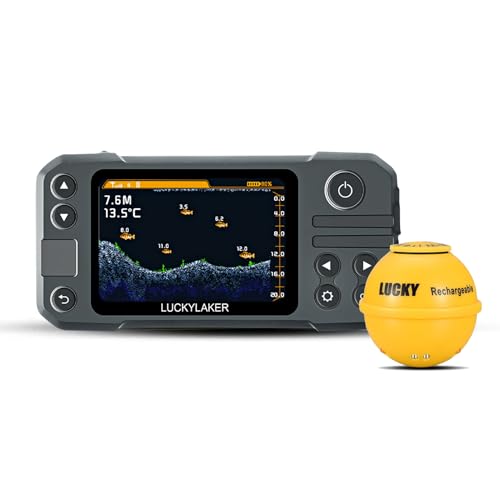 Best for kayaks and tight spacesLUCKY Kayak Portable Fish Finder TransducerView on Amazon
- 5
 Best budget pickVenterior Portable Rechargeable Fish Finder Wireless Sonar SensorView on Amazon
- 6
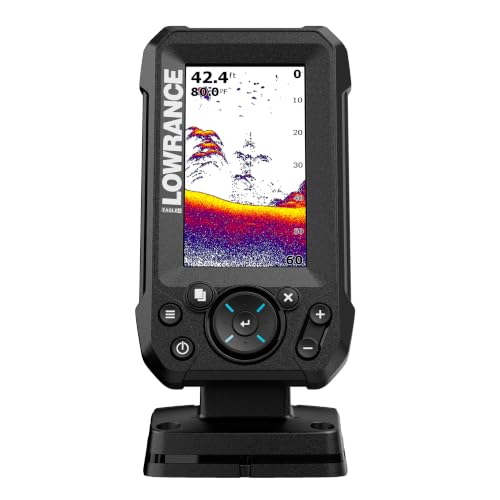 Best for a bright, detailed screenLowrance Eagle 4X Fish Finder with Bullet TransducerView on Amazon
- 7
 Best for deep-water sonar scanningFish Finders Depth Finders for Boats Wireless Color LCD XF-08View on Amazon
Our Top Picks
Quick Comparison
| Product | Best for | Key feature |
|---|---|---|
| Garmin Striker 4 with Transducer | Overall use with GPS | Chirp sonar with built-in GPS |
| HawkEye DepthTrax 2B in-Dash LCD Depth Finder | Fixed-mount installs | Transom-mount transducer |
| Portable Fish Finder Large HD Display Wireless Depth Finders for Boats | Deeper water readings | 147 feet depth detection |
| LUCKY Kayak Portable Fish Finder Transducer | Kayaks and small craft | Compact handheld transducer |
| Venterior Portable Rechargeable Fish Finder Wireless Sonar Sensor | Budget-minded anglers | Rechargeable wireless sensor |
| Lowrance Eagle 4X Fish Finder with Bullet Transducer | Clear, readable screens | 4-inch IPS display with autotuning sonar |
| Fish Finders Depth Finders for Boats Wireless Color LCD XF-08 | Quick portable scanning | 164 feet depth detection |
Garmin Striker 4 with Transducer
Garmin 010-01550-00 Striker 4 with Transducer, 3.5" GPS Fishfinder with Chirp
Best for: Anglers who want depth, GPS and sonar in one unit
This is a fishfinder with a fixed transducer and a screen sized for a small boat console or kayak mount. It suits anglers who want to mark spots and return to them, not only read the bottom.
Key specs
- 3.5-inch display
- Chirp sonar
- Built-in GPS
Pros
- Combines sonar and GPS waypoints in one unit
- Chirp sonar gives sharper target separation
- Simple button layout for quick changes on the water
Cons
- Fixed-mount transducer is less flexible than a true wireless sensor
- Small screen can be harder to read in bright sun
Bottom line: The right pick for anglers who want a single dependable unit with mapping and marking, and who can mount a transducer.
View on AmazonHawkEye DepthTrax 2B in-Dash LCD Depth Finder
HawkEye DepthTrax 2B in-Dash LCD Depth Finder with Transom-Mount Transducer
Best for: Fixed-mount installs on small powerboats
This depth finder mounts into the dash with a transom-mount transducer. It is not a true wireless sensor, but it suits boaters who want a permanent, low-maintenance readout.
Key specs
- LCD display
- Transom-mount transducer
Pros
- Permanent install with no battery to swap in the sensor
- Straightforward depth readout
- Works well for boats that stay in one home area
Cons
- Requires drilling and wiring, which is not wireless in the usual sense
- Fewer features than current multi-function units
Bottom line: Best for boaters who want a fixed, wired-style depth readout and are comfortable with a permanent install.
View on AmazonPortable Fish Finder Large HD Display Wireless Depth Finders for Boats
Portable Fish Finder Large HD Display Wireless Depth Finders for Boats with 147 feet Depth Detection Sensor, Rechargeable Castable Fish Finder Display Fish, Temp
Best for: Deeper water readings from a portable sensor
This unit is aimed at anglers who fish deeper water from a boat or kayak and want a large display and a rechargeable handheld setup.
Key specs
- 147 feet depth detection (per listing)
- Large HD display
- Rechargeable
Pros
- Listed depth range is well above most small portable units
- Large display is easier to read at a glance
- Rechargeable design avoids constant battery purchases
Cons
- Owners often report that accuracy drops in heavy weeds or turbid water
- Portable sensors need regular charging before trips
Bottom line: A good match for anglers who need depth reach from a light, wireless setup.
View on AmazonLUCKY Kayak Portable Fish Finder Transducer
LUCKY Kayak Portable Fish Finder Transducer Wireless Sonar Fish Finders Boat Rechargeable Handheld Fish Depth Finder Fishing MT-202
Best for: Kayaks and other small craft with limited space
This is a compact, handheld-style unit built for paddle craft and small boats where mounting space is tight and weight matters.
Key specs
- Portable, handheld design
- Rechargeable
Pros
- Light enough for a kayak without a dedicated mount
- Quick to deploy and pack away
- Simple controls for beginners
Cons
- Smaller screen limits detail in busy water
- Shorter sensor reach than larger portable units
Bottom line: Best for paddlers and anglers in shallow water who value portability over screen size.
View on AmazonVenterior Portable Rechargeable Fish Finder Wireless Sonar Sensor
Venterior Portable Rechargeable Fish Finder Wireless Sonar Sensor Fishfinder Depth Locator with Fish Size, Temperature, Bottom Contour, Color Display
Best for: Budget-minded anglers who want a wireless sensor
This sensor-and-display setup is positioned as an accessible entry into wireless depth finding for casual anglers and small-boat owners.
Key specs
- Rechargeable wireless sonar sensor
- Color display
Pros
- Straightforward wireless setup
- Rechargeable battery design
- Covers the basics: depth, bottom contour and temperature
Cons
- Owners often report that screen detail is limited compared with premium units
- Build and range are typical of budget portable sensors
Bottom line: A reasonable starting point for occasional use, not for demanding offshore work.
View on AmazonLowrance Eagle 4X Fish Finder with Bullet Transducer
Lowrance Eagle 4X Fish Finder with Bullet Transducer | 4-inch IPS Display; wide-angle sonar coverage; autotuning sonar; easy twist-lock connector
Best for: Clear, readable screens on a small boat
This unit uses a bullet transducer and a 4-inch IPS display, aimed at boaters who want a readable screen and automatic sonar tuning.
Key specs
- 4-inch IPS display
- Wide-angle sonar coverage
- Autotuning sonar
- Twist-lock connector
Pros
- IPS screen holds up better at angles than many budget displays
- Autotuning reduces setup time
- Twist-lock connector is quick to disconnect
Cons
- Bullet transducer requires a suitable mounting point
- Not as compact as handheld wireless sensors
Bottom line: A strong choice for boaters who put screen clarity first and can mount a transducer.
View on AmazonFish Finders Depth Finders for Boats Wireless Color LCD XF-08
Fish Finders Depth Finders for Boats Wireless Color LCD XF-08 – Smart Portable Sonar Sensor with 164ft Depth Detection, Real-Time Scanning, Temperature Display for Lake, River, Fishing Accessories
Best for: Quick portable scanning in deeper lakes and rivers
This portable sonar sensor with a color LCD is aimed at anglers who want to scan unfamiliar water quickly from a boat or bank.
Key specs
- 164 feet depth detection (per listing)
- Color LCD
- Temperature display
Pros
- Listed depth range is useful for lake and river fishing
- Color display makes contours easier to interpret
- Temperature readout adds useful context
Cons
- Owners often report that battery life is shorter than they would like
- Brand reputation is less established than the major marine electronics makers
Bottom line: A practical portable option for anglers who scan water often and want color and depth range without a fixed install.
View on AmazonBuying Guide
Sonar range and depth detection
Check the maximum listed depth against the water you actually fish. A unit rated to 150 or 160 feet is more than most small-boat anglers need, but it provides headroom in deep reservoirs. Keep in mind that listed range is a best-case figure in clear water. Muddy water, heavy vegetation and waves all reduce effective range.
Good picks for this: Portable Fish Finder Large HD Display Wireless Depth Finders for Boats, Fish Finders Depth Finders for Boats Wireless Color LCD XF-08
Display size and readability
Screen size and resolution determine how much detail you can read at a glance. Bright sunlight is the main enemy. Look for IPS or high-contrast displays and consider whether you will be reading the screen while steering or while seated at the helm.
Good picks for this: Lowrance Eagle 4X Fish Finder with Bullet Transducer, Garmin Striker 4 with Transducer
Wireless vs. fixed mounting
A true wireless sensor is easy to move between boats, kayaks and shore spots, but it needs charging and can drift. A fixed transducer gives steadier readings and is better for permanent installs. Decide how often you will move the unit before you buy.
Good picks for this: Venterior Portable Rechargeable Fish Finder Wireless Sonar Sensor, HawkEye DepthTrax 2B in-Dash LCD Depth Finder
Battery and charging
Rechargeable portable units simplify costs, but check how long a charge lasts and whether the battery can be replaced. Charge the unit fully before a trip, and store it in a dry, cool place. Lithium-ion batteries should not be left in a hot car or exposed to extreme cold. For battery safety questions, consult the manufacturer’s guidance or a qualified marine electronics technician.
Good picks for this: LUCKY Kayak Portable Fish Finder Transducer, Portable Fish Finder Large HD Display Wireless Depth Finders for Boats
Size, weight and fit on your boat
For kayaks and small craft, weight and footprint matter more than a large screen. Measure your mounting space and choose a unit whose display and transducer fit without blocking sightlines or storage. A pontoon or houseboat tender can often handle a larger screen.
Good picks for this: LUCKY Kayak Portable Fish Finder Transducer, Garmin Striker 4 with Transducer
Sonar features and target separation
Chirp sonar and autotuning improve how well a unit separates fish from bottom and structure. Features vary by model, so compare the specifications listed by each manufacturer rather than assuming a feature is present.
Good picks for this: Garmin Striker 4 with Transducer, Lowrance Eagle 4X Fish Finder with Bullet Transducer
Durability and care
Rinse portable sensors with fresh water after use, especially in saltwater. Keep connectors dry and clean, and store units out of direct sun. Check the ingress protection rating when the manufacturer lists one, and follow the cleaning steps in the manual.
Good picks for this: Venterior Portable Rechargeable Fish Finder Wireless Sonar Sensor, Fish Finders Depth Finders for Boats Wireless Color LCD XF-08
FAQ
Does a wireless boat depth finder work in saltwater?
Many portable units can be used in saltwater, but salt and sun exposure shorten component life. Rinse the sensor and display with fresh water after each trip and check the manufacturer’s stated water resistance.
How deep can a wireless depth finder read?
Listed depth detection ranges vary by model and are usually best-case figures in clear water. Models with a listed range of about 150 to 165 feet cover most lake and river fishing. Actual performance depends on water clarity, bottom type and sensor placement.
Do I need a transducer for a wireless depth finder?
Portable wireless units include their own sonar sensor, so no separate transducer install is needed. Fixed-mount units like the Garmin Striker 4 and the HawkEye DepthTrax 2B use a transducer mounted to the hull or transom.
How long does a rechargeable portable depth finder last?
Battery life depends on the model, screen brightness and how often the sonar is active. Owners often report needing to recharge after a full day of use, so charge before each trip and carry a spare plan for longer outings.
Can I use a wireless depth finder from a kayak?
Yes. Compact portable units are designed for kayaks and small craft. Choose a model with a light sensor and a secure mount point so it does not shift while you paddle.
Is a fixed depth finder better than a wireless one?
A fixed unit gives steadier readings and suits permanent installs. A wireless unit is easier to move and works on multiple craft. Pick based on how you fish and how often you change boats or spots.
Are depth finders with GPS worth it?
GPS adds waypoints and mapping, which help you return to productive spots. It is most useful for anglers who fish the same water repeatedly. Simple depth-only units are fine for shallow, familiar water.
Conclusion
For most boaters, the Garmin Striker 4 offers the most complete feature set when a fixed transducer is acceptable. If you want a permanent, low-maintenance readout, the HawkEye DepthTrax 2B fits that role. Anglers who need depth reach from a portable sensor should look at the Portable Fish Finder Large HD Display or the Fish Finders Depth Finders for Boats Wireless Color LCD XF-08. Kayakers and paddlers do best with the LUCKY Kayak Portable Fish Finder Transducer. Budget buyers can start with the Venterior Portable Rechargeable Fish Finder Wireless Sonar Sensor, and boaters who put screen clarity first will like the Lowrance Eagle 4X.
For wiring, mounting and installation questions that go beyond a portable unit, see Depth Finder for Small Boat: How to Choose and Mount One (5 Steps) and Battery for Depth Finder: How to Choose and Maintain the Right One. Readers comparing transducer types can also check What Is a Transducer on a Depth Finder? How It Works and Why It Matters.
Sources
- Recreational boating safety guidance, including equipment and navigation aids (uscg.mil)
- Nautical charts, water depth data and navigation resources (noaa.gov)
- Standards and industry information for recreational marine equipment
Related reading
- What Gauge Wire for Depth Finder? Sizing Guide for Boats
- Pontoon Boat Depth Finder: How to Choose, Mount and Use One (2026)
- How Much Is a Depth Finder for a Boat? Price Ranges and What Drives Them
About Owen Palmer
Owen Palmer is part of our editorial team and reviews and edits our houseboating guides, checking product details against manufacturer specifications and owner feedback.
About the author
Owen Palmer writes reviews and buying guides for Discover Houseboating.