Top 5 Depth Finders for Canoe Picks Compared for Every Paddler
Looking for a depth finder for canoe use? Compare five options by portability, battery life, mounting and display so you can pick the right one for your paddlin
 By Owen Palmer
Updated November 22, 2026
 By Owen Palmer
Updated November 2026
Choosing a depth finder for canoe use comes down to a few practical questions: how much room you have, whether you need to mount it or carry it, how long the battery lasts, and whether the screen is readable in bright sun. This list compares five options across those criteria, from castable and handheld units to a fixed-mount sonar head, so you can match the right tool to how you actually paddle.
Our top picks at a glance
- 1TOP CHOICEBest overallGarmin 010-01550-00 Striker 4 with Transducer, 3.5" GPS Fishfinder with ChirpView on Amazon
- 2
 TOP CHOICEBest for budget-minded paddlersLUCKY Kayak Portable Fish Depth Finder Water Handheld Fish Finder SonaView on Amazon
- 3
 TOP CHOICEBest for simple handheld readingsHandheld Fish Finder Portable Kayak Fishfinder Sonar Depth LCD DisplayView on Amazon
- 4
 Best for shore and dock useDeeper Start Fish Finder – Portable and Depth Finder for Recreational FishingView on Amazon
- 5
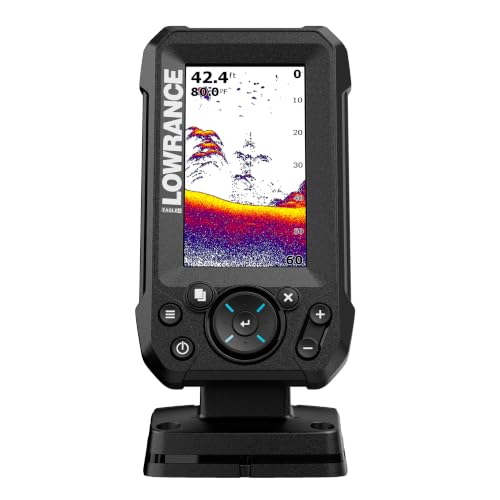 Best for a larger screenLowrance Eagle 4X Fish Finder with Bullet TransducerView on Amazon
Our Top Picks
| Product | Best for | Key feature |
|---|---|---|
| Garmin Striker 4 | Overall use | Chirp sonar with GPS |
| LUCKY Kayak Portable Fish Depth Finder | Budget-minded paddlers | Castable transducer, LCD |
| Handheld Fish Finder Portable Kayak Fishfinder Sonar | Simple handheld readings | Compact handheld display |
| Deeper Start Fish Finder | Shore and dock use | Castable smart sonar app |
| Lowrance Eagle 4X Fish Finder | Larger screen | 4-inch IPS display |
Garmin 010-01550-00 Striker 4 with Transducer, 3.5″ GPS Fishfinder with Chirp
Garmin 010-01550-00 Striker 4 with Transducer, 3.5" GPS Fishfinder with Chirp
Best for: Overall use with GPS-linked mapping
This suits paddlers who want a dependable sonar with a built-in GPS and a clear color screen, and who can mount a transducer on the hull.
Pros
- Chirp sonar gives detailed target separation.
- Built-in GPS helps log spots and track position.
Cons
- Requires a permanent or semi-permanent transducer mount.
LUCKY Kayak Portable Fish Depth Finder Water Handheld Fish Finder Sonar Castable Kayak Boat Fishfinder Transducer Fishing LCD Display FFC1108
LUCKY Kayak Portable Fish Depth Finder Water Handheld Fish Finder Sonar Castable Kayak Boat Fishfinder Transducer Fishing LCD Display FFC1108
Best for: Budget-minded paddlers who want a castable unit
A good fit for anglers who paddle light boats and want a unit they can toss over the side without a permanent install.
Pros
- Castable transducer works without drilling.
- Simple LCD readout is easy to follow.
Cons
- Basic display offers less detail than larger units.
Handheld Fish Finder Portable Kayak Fishfinder Sonar Depth LCD Display
Handheld Fish Finder Portable Kayak Fishfinder Sonar Depth LCD Display | Reliable fish & depth readings, easy to use, great value for kayak/boat fishing
Best for: Simple handheld readings
Best for paddlers who want to check depth quickly and move the unit between boats without any setup.
Pros
- Fully portable with no mounting required.
- Straightforward controls for quick depth checks.
Cons
- Owners often report limited detail in deeper water.
Deeper Start Fish Finder – Portable and Depth Finder for Recreational Fishing
Deeper Start Fish Finder – Portable and Depth Finder for Recreational Fishing from Dock, Shore, Bank or Kayak | Castable Deeper Smart Sonar with Free User Friendly App
Best for: Shore, dock and kayak use
Suited to paddlers who fish from several spots and want a castable unit paired with a phone app for readings and logging.
Pros
- Works from shore, dock or canoe.
- Phone app adds mapping and logging.
Cons
- Relies on a phone connection for full features.
Lowrance Eagle 4X Fish Finder with Bullet Transducer
Lowrance Eagle 4X Fish Finder with Bullet Transducer | 4-inch IPS Display; wide-angle sonar coverage; autotuning sonar; easy twist-lock connector
Best for: Larger screen and wide sonar coverage
A practical choice for paddlers who want a bigger display and wide-angle coverage, and who can handle a bullet transducer mount.
Pros
- 4-inch IPS display is easier to read in daylight.
- Autotuning sonar reduces setup time.
Cons
- Larger footprint than handheld options.
Buying Guide
Portability and mounting
If you carry the unit in and out every trip, a handheld or castable model keeps things simple. Permanent transducer mounts give steadier readings but take more time to install.
Display size and readability
A larger screen helps when glare is strong. Check how the display performs in direct sun before you commit, since owners often report that small screens are harder to read on the water.
Battery life and power source
Canoe trips can run long, so look at how the unit is powered and how easily you can swap or recharge batteries. For more on this, see Battery for Depth Finder: How to Choose and Maintain the Right One.
Sonar type and depth range
Confirm the maximum depth and the sonar type before buying. If you fish in shallow water, a unit with clear shallow-water readings matters more than maximum depth.
Good picks for this: Deeper Start Fish Finder and Handheld Fish Finder Portable Kayak Fishfinder Sonar
FAQ
Can I use a depth finder for canoe trips without drilling into the hull?
Yes. Castable and handheld units avoid drilling entirely, though they may give less steady readings than a hull-mounted transducer.
Related reading
- Will Depth Finder Work Out of Water? What Happens and What to Do
- Where to Mount Depth Finder on Pontoon: Placement Guide
- What Is a Transducer on a Depth Finder? How It Works and Why It Matters
- What Is Chirp on a Depth Finder? Causes and Fixes
About Owen Palmer
Owen Palmer is part of our editorial team and reviews and edits our houseboating guides, checking product details against manufacturer specifications and owner feedback.
About the author
Owen Palmer writes reviews and buying guides for Discover Houseboating.