Top 6 Best Inexpensive Depth Finder Picks for Budget Boaters
Looking for the best inexpensive depth finder? Compare six budget-friendly sonar units by best use, key features and trade-offs before you buy.
 By Owen Palmer
Updated November 22, 2026
 By Owen Palmer
Updated November 2026
Shoppers looking for the best inexpensive depth finder usually want one thing: reliable depth readings without a premium price tag. This list compares six budget-friendly units across handheld, in-dash and GPS-capable designs. Selection criteria include the mounting style, display size, depth range, transducer type and how well each unit suits small boats, kayaks and houseboat tenders.
Our top picks at a glance
- 1TOP CHOICEBest overallGarmin 010-01550-00 Striker 4 with Transducer, 3.5" GPS Fishfinder with ChirpView on Amazon
- 2
 TOP CHOICEBest for kayaksHandheld Fish Finder Portable Kayak Fishfinder Sonar Depth LCD DisplayView on Amazon
- 3
 TOP CHOICEBest for temperature readingsHawkEye DepthTrax DT1H Handheld Depth Finder with LCD, Temperature, 300 ftView on Amazon
- 4
 Best for permanent dash mountingHawkEye DepthTrax 2B in-Dash LCD Depth Finder with Transom-Mount TransducerView on Amazon
- 5
 Best for casting from shore or kayakLUCKY Kayak Portable Fish Depth Finder Water Handheld Fish Finder SonaView on Amazon
- 6
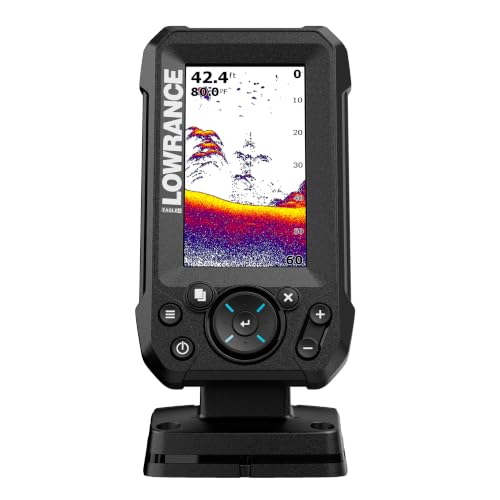 Best for wide sonar coverageLowrance Eagle 4X Fish Finder with Bullet TransducerView on Amazon
Our Top Picks
| Product | Best for | Key feature |
|---|---|---|
| Garmin Striker 4 | Overall value | Chirp sonar, GPS |
| Handheld Kayak Fishfinder | Kayaks | Portable LCD display |
| HawkEye DepthTrax DT1H | Temperature readings | 300 ft depth range |
| HawkEye DepthTrax 2B | Dash mounting | Transom-mount transducer |
| LUCKY Kayak Portable Fish Depth Finder | Casting and kayaks | Castable transducer |
| Lowrance Eagle 4X | Wide sonar coverage | 4-inch IPS display |
Garmin 010-01550-00 Striker 4 with Transducer, 3.5″ GPS Fishfinder with Chirp
Garmin 010-01550-00 Striker 4 with Transducer, 3.5" GPS Fishfinder with Chirp
Best for: Overall value on small boats and pontoons
This unit suits anglers who want chirp sonar and GPS mapping without stepping up to a large-screen model.
- Chirp sonar for sharper target separation
- Built-in GPS for waypoints and tracks
Cons:
- Small 3.5-inch screen can feel cramped in bright sun
HawkEye DepthTrax DT1H Handheld Depth Finder with LCD, Temperature, 300 ft
HawkEye DepthTrax DT1H Handheld Depth Finder with LCD, Temperature, 300 ft
Best for: Temperature readings alongside depth
A handheld option for anglers who want a quick depth and water temperature check from the boat or dock.
- Rated to a 300-foot depth range per manufacturer specs
- Displays water temperature with depth
Cons:
- Handheld use means you must hold it steady over the target
Handheld Fish Finder Portable Kayak Fishfinder Sonar Depth LCD Display
Handheld Fish Finder Portable Kayak Fishfinder Sonar Depth LCD Display | Reliable fish & depth readings, easy to use, great value for kayak/boat fishing
Best for: Kayak and small boat fishing
Built for paddlers who need a light, portable unit that goes wherever the kayak goes.
- Lightweight and easy to carry
- Clear LCD for quick depth reads
Cons:
- Limited features compared with GPS units
HawkEye DepthTrax 2B in-Dash LCD Depth Finder with Transom-Mount Transducer
HawkEye DepthTrax 2B in-Dash LCD Depth Finder with Transom-Mount Transducer
Best for: Permanent dash mounting
A fixed installation for boaters who want depth visible at the helm without carrying a handheld unit.
- Permanent helm mounting
- Transom-mount transducer for steady readings
Cons:
- Installation takes more time than a handheld
LUCKY Kayak Portable Fish Depth Finder Water Handheld Fish Finder Sonar Castable Transducer FFC1108
LUCKY Kayak Portable Fish Depth Finder Water Handheld Fish Finder Sonar Castable Kayak Boat Fishfinder Transducer Fishing LCD Display FFC1108
Best for: Casting from shore or a kayak
Suited to anglers who want to cast the transducer and read the bottom without a permanent installation.
- Castable transducer for shore and kayak use
- Portable LCD display
Cons:
- Cast-and-retrieve use can be slower than a fixed transducer
Lowrance Eagle 4X Fish Finder with Bullet Transducer
Lowrance Eagle 4X Fish Finder with Bullet Transducer | 4-inch IPS Display; wide-angle sonar coverage; autotuning sonar; easy twist-lock connector
Best for: Wide sonar coverage
A larger-screen option for anglers who want broader sonar coverage and autotuning on a small boat.
- 4-inch IPS display
- Autotuning sonar and wide-angle coverage
Cons:
- Costs more than the handheld units on this list
Buying Guide
Mounting Style
Handheld units suit kayaks and shore fishing, while in-dash models suit boats with a fixed helm. Decide where you will use the unit most before buying.
Transducer Type
Transom-mount transducers give steadier readings on powerboats, while castable transducers work well on kayaks. Check the mounting method listed by the manufacturer.
Depth Range and Display Size
Manufacturers list maximum depth ratings, and most small-boat anglers rarely need more than their home waters require. A larger display helps in bright sun but adds size and power draw.
FAQ
What is the difference between a handheld depth finder and an in-dash unit?
A handheld depth finder is portable and easy to move between boats, kayaks or the shore, which makes it a good fit for small craft. An in-dash unit is mounted permanently on the console and usually offers a larger, more convenient display for a fixed boat setup.
Do I need a GPS feature in a budget depth finder?
GPS is useful if you want to mark fishing spots, save routes or return to productive areas later. If you only need to know the depth beneath your hull, a basic sonar unit without GPS will usually be enough and keep the cost down.
What does transducer type affect?
The transducer sends and receives the sonar signal, so its type shapes how much water the unit covers and how clearly it picks up structure. Transom-mount, bullet and castable transducers each suit different boats and mounting situations, so match the type to where you plan to use the unit.
Is a depth finder with a larger display always better?
A larger display makes it easier to read the screen at a glance, especially in bright sunlight or rough water. However, a smaller screen can still work well on a kayak or small boat where space is limited and portability matters more.
Can a budget depth finder read water temperature?
Some inexpensive models include a temperature reading, which can help you locate fish that prefer specific water temperatures. Not every budget unit has this feature, so check the specifications before buying if temperature matters to your fishing.
How deep can an inexpensive depth finder measure?
Depth range varies by model, and the maximum depth depends on the transducer and the water conditions. For most inland lakes and rivers, a budget unit should cover typical fishing depths, but confirm the stated range against the water you fish most often.
Conclusion
For most budget boaters who want a dependable, all-around unit, the Garmin Striker 4 is a strong starting point, especially if GPS mapping appeals to you. Kayak anglers and those who need something light and portable will likely do better with a handheld model, while anyone wanting a fixed console display should look at the HawkEye in-dash unit.
If you want advanced sonar coverage and a larger screen, the Lowrance Eagle 4X is worth considering as you step up slightly in features. Whichever you choose, match the mounting style, transducer type and depth range to how and where you actually fish.
Related reading
- Best Depth Finder and GPS for Houseboats: How to Choose the Right One
- 7 Best Depth Finders for Jetski Options Compared for 2026
- 7 Best Depth Finder Trolling Motor Mounts for Pontoon and Small Boats (2026)
- 6 Best Portable Sonar Depth Finder Options for Kayaks and Small Boats
- 5 Best Saltwater Depth Finder Models for Offshore Boating (2026)
- 4 Best Ice Fishing Depth Finder Weights for Winter Anglers (2026)
About Owen Palmer
Owen Palmer is part of our editorial team and reviews and edits our houseboating guides, checking product details against manufacturer specifications and owner feedback.
About the author
Owen Palmer writes reviews and buying guides for Discover Houseboating.