6 Best Portable Sonar Depth Finder Options for Kayaks and Small Boats
Compare six portable sonar depth finder options for kayaks, boats and shore fishing. See key features, pros, cons and what to check before you buy.
 By Owen Palmer
Updated November 21, 2026
 By Owen Palmer
Updated November 2026
A portable sonar depth finder lets you read water depth, bottom contour and sometimes fish arches without a permanently mounted unit. This guide compares six options that owners often pair with kayaks, small boats and shore setups. The selection criteria: portability and weight, how the unit attaches to the boat or casts from shore, display readability in sunlight, battery life, and whether it includes GPS or a companion app. For background on how these units read the bottom, see How Does a Depth Finder Work on a Boat? Sonar Basics Explained.
Our top picks at a glance
- 1TOP CHOICEBest overallLUCKY Kayak Portable Fish Depth Finder Water Handheld Fish Finder SonaView on Amazon
- 2
 TOP CHOICEBest for wireless readingsVenterior Portable Rechargeable Fish Finder Wireless Sonar Sensor FishView on Amazon
- 3
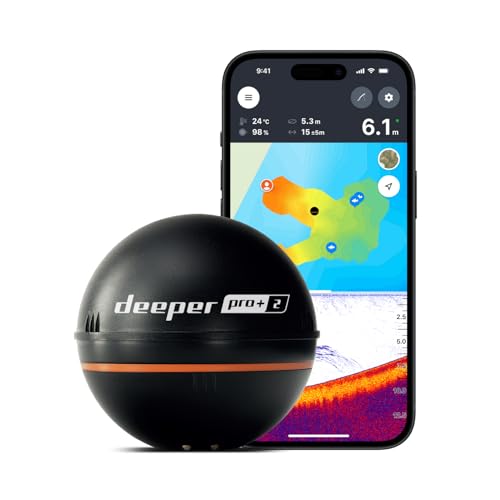 TOP CHOICEBest for GPS mappingDeeper PRO+ 2 Sonar Fish Finder – Portable Fish Finder and Depth FindeView on Amazon
- 4
 Best budget pickHandheld Fish Finder Portable Kayak Fishfinder Sonar Depth LCD DisplayView on Amazon
- 5
 Best for chirp sonar on a boatGarmin 010-01550-00 Striker 4 with Transducer, 3.5" GPS Fishfinder with ChirpView on Amazon
- 6
 Best for shore and dock fishingDeeper Start Fish Finder – Portable and Depth Finder for RecreationalView on Amazon
Our Top Picks
Quick Comparison
| Product | Best for | Key feature |
|---|---|---|
| LUCKY Kayak Portable Fish Depth Finder | Kayak depth checks | Castable handheld transducer |
| Venterior Portable Rechargeable Fish Finder | Wireless sensor readings | Rechargeable wireless sensor |
| Deeper PRO+ 2 Sonar Fish Finder | GPS-enabled mapping | GPS with companion app |
| Handheld Fish Finder Portable Kayak Fishfinder | Budget kayak use | Simple LCD depth display |
| Garmin Striker 4 | Chirp sonar on a small boat | Chirp sonar with GPS |
| Deeper Start Fish Finder | Dock and shore fishing | Castable smart sonar |
LUCKY Kayak Portable Fish Depth Finder Water Handheld Fish Finder Sonar Castable Kayak Boat Fishfinder Transducer Fishing LCD Display FFC1108
LUCKY Kayak Portable Fish Depth Finder Water Handheld Fish Finder Sonar Castable Kayak Boat Fishfinder Transducer Fishing LCD Display FFC1108
Best for: Kayak depth checks
Suited to paddlers who want a simple, handheld-style unit to check depth and structure while moving slowly over shallow water.
Pros
- Lightweight and easy to carry between launch sites
- Castable transducer works from kayaks and small boats
Cons
- Small LCD can be hard to read in strong sunlight
Venterior Portable Rechargeable Fish Finder Wireless Sonar Sensor Fishfinder Depth Locator with Fish Size, Temperature, Bottom Contour, Color Display
Venterior Portable Rechargeable Fish Finder Wireless Sonar Sensor Fishfinder Depth Locator with Fish Size, Temperature, Bottom Contour, Color Display
Best for: Wireless sensor readings
Fits anglers who want the sensor separated from the display, so the screen stays in the boat while the sensor drifts ahead.
Pros
- Rechargeable battery reduces disposable battery use
- Shows bottom contour and temperature alongside depth
Cons
- Wireless link can drop at longer distances, according to owner reports
Deeper PRO+ 2 Sonar Fish Finder – Portable Fish Finder and Depth Finder For Kayaks, Boats and Ice Fishing with GPS Enabled
Deeper PRO+ 2 Sonar Fish Finder – Portable Fish Finder and Depth Finder For Kayaks, Boats and Ice Fishing with GPS Enabled | Castable Deeper Fish Finder with FREE User Friendly App
Best for: GPS-enabled mapping
Works for anglers who want waypoints and a phone-based map alongside depth readings, across kayaks, boats and ice.
Pros
- GPS tags spots so you can return to productive water
- Companion app displays readings on a phone
Cons
- Relies on a phone app, so phone battery becomes a factor
Handheld Fish Finder Portable Kayak Fishfinder Sonar Depth LCD Display
Handheld Fish Finder Portable Kayak Fishfinder Sonar Depth LCD Display | Reliable fish & depth readings, easy to use, great value for kayak/boat fishing
Best for: Budget kayak use
A straightforward option for occasional paddlers who mainly want depth numbers and a basic bottom read.
Pros
- Simple controls with little setup
- Low-cost entry point for kayak sonar
Cons
- Fewer features than GPS-equipped units
Garmin 010-01550-00 Striker 4 with Transducer, 3.5″ GPS Fishfinder with Chirp
Garmin 010-01550-00 Striker 4 with Transducer, 3.5" GPS Fishfinder with Chirp
Best for: Chirp sonar on a small boat
Suits small boat owners who want a dedicated display with chirp sonar and GPS, mounted rather than handheld.
Pros
- Chirp sonar gives a more detailed picture of structure
- Built-in GPS for marking locations
Cons
- Mounting hardware adds setup steps compared with handhelds
Deeper Start Fish Finder – Portable and Depth Finder for Recreational Fishing from Dock, Shore, Bank or Kayak
Deeper Start Fish Finder – Portable and Depth Finder for Recreational Fishing from Dock, Shore, Bank or Kayak | Castable Deeper Smart Sonar with Free User Friendly App
Best for: Dock and shore fishing
Built for anglers who cast from docks, banks or shorelines and want depth and fish marks on a phone.
Pros
- Castable design works without a boat
- Free app displays readings on a phone
Cons
- Phone connection is required for most readings
Buying Guide
Portability and Weight
Since you will likely carry the unit to the water, consider how heavy the handheld display and transducer are together. Compact units that clip onto a kayak or fit in a small tackle bag are usually the easiest to move between spots. Think about whether you will be walking far from the parking area or launching from a narrow dock. You may also like 7 Best Depth Finders for Jetski Options Compared for 2026.
Mounting and Casting Method
Some portable sonar options are castable, meaning you throw a floating sensor out and reel it back in, while others use a transducer mounted to the hull or a clamp. Castable units suit shore and dock fishing well, while mounted transducers tend to give steadier readings from a moving kayak. Pick the method that matches where you plan to fish most often.
Display Readability in Sunlight
A screen that washes out in bright sun can make depth and fish readings hard to interpret. Look for an LCD or color display with adjustable brightness, and consider whether you need a backlight for early morning or dusk trips. Clear, large text is also helpful when you are working a rod at the same time.
Battery Life and Charging
Check whether the unit uses rechargeable batteries, replaceable batteries, or a built-in pack, and how long it runs on a charge. Long days on the water make battery life important, so a unit with a reliable runtime or easy battery swaps is a practical choice. Carrying a spare battery or a small charger can save a trip.
GPS and App Support
Some portable finders add GPS to mark waypoints, while others rely on a companion app for logging and viewing data on your phone. If you want to return to productive spots or share tracks, GPS or app compatibility is worth prioritizing. If you only need to check depth and bottom contour, a simpler standalone display may be enough.
FAQ
Can a portable sonar depth finder be used from a kayak?
Yes, many portable units are designed specifically for kayaks and small boats, with lightweight displays and transducers that mount or clip to the hull. Compact castable models also work well when you want to scan from the kayak without a permanent install. Check the mounting options before buying to confirm they suit your kayak.
Do portable fish finders work from shore or a dock?
Several of these options are built for shore, dock and bank fishing, using a castable sensor that you throw out and retrieve. This lets you read depth and bottom structure without a boat at all. Casting range and retrieval comfort vary by model, so consider your typical fishing spots.
How accurate are portable sonar depth readings?
Readings from portable units are generally useful for finding depth changes, structure and bottom type, but they are not a substitute for charts or dedicated navigation equipment. Water conditions, speed, and sensor placement can all affect what you see on screen. Treat the readings as a helpful guide and confirm important depths with other tools when safety matters.
Do I need GPS on a portable fish finder?
GPS is not required for basic depth and fish reading, but it is useful if you want to mark and return to productive spots. Units without GPS can still be effective for quick checks on familiar water. Decide based on whether you plan to track locations or simply read depth on the fly.
Conclusion
Anglers who want a simple, lightweight setup for kayaks and small boats will get the most value from the compact handheld and transducer options, while those fishing mainly from shore or docks should favor castable units. Shoppers who want wireless readings, app support, or GPS tracking should look at the models with those features, even if they cost a bit more in setup.
For budget-minded paddlers who mostly need straightforward depth and bottom readings, a basic portable unit is often enough. Anglers who plan to log spots and rely on detailed data should choose a model with GPS or strong app integration. Match the feature set to how and where you actually fish, and the right choice will be clear.
Related reading
- Will Depth Finder Work Out of Water? What Happens and What to Do
- Where to Mount Depth Finder on Pontoon: Placement Guide
- What Is a Transducer on a Depth Finder? How It Works and Why It Matters
About Owen Palmer
Owen Palmer is part of our editorial team and reviews and edits our houseboating guides, checking product details against manufacturer specifications and owner feedback.
About the author
Owen Palmer writes reviews and buying guides for Discover Houseboating.